JPMorgan Nears $1 Trillion Valuation as Wall Street Credits the 'Jamie Dimon Premium'
The bank's market value has jumped from $138 billion to roughly $970 billion since Jamie Dimon took over, and analysts say investors are still paying extra for him personally.
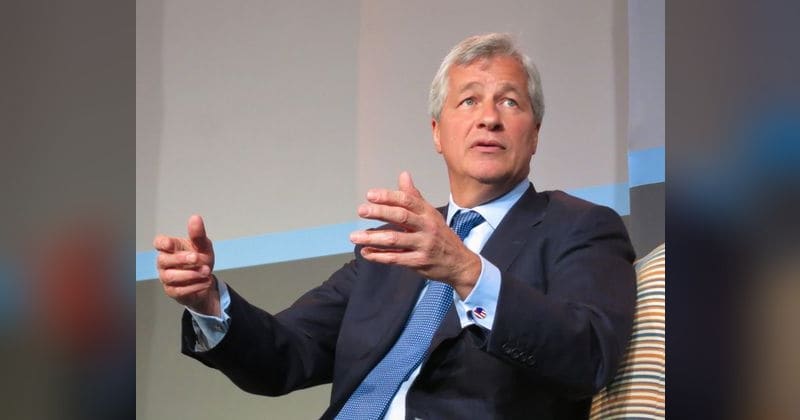
JPMorgan Chase was worth roughly $970 billion on Monday morning, according to Fortune, putting the bank within reach of becoming the first in the world to hit a $1 trillion market value. That is a startling climb from the $138 billion the bank was worth on December 30, 2025, just before Jamie Dimon became chief executive. Last month, JPMorgan posted the highest quarterly profit ever recorded by a U.S. bank, Fortune reported.
A Playbook Built On Crisis
Dimon has spent two decades building what he calls a "fortress balance sheet," a strategy of holding enough financial cushion to survive downturns and then buying rivals when they falter, according to Fortune. That approach let JPMorgan snap up Bear Stearns and Washington Mutual during the 2008 financial crisis and buy First Republic during the 2023 regional banking crisis.
Wells Fargo analyst Mike Mayo wrote in an August 13 note, cited by Fortune, that JPMorgan's real advantage is its ability to spend heavily on branches, bankers and technology, then plow the resulting growth back into even more investment. Mayo called it a "flywheel" that could push the bank to a $2 trillion valuation within seven to eight years.
That forecast comes with caveats. Mayo pointed out that the past decade has not included what he considers a genuine recession, and that unusually strong markets have boosted revenue across the entire banking industry. JPMorgan's stock is also trading near its highest earnings multiple since the 2008 crisis, meaning future gains will likely have to come from actual profit growth rather than investors paying more for the same earnings. Mayo estimated that two-thirds of the bank's stock market gains over the past six years came from earnings per share doubling, with only a third from a richer valuation multiple.
The Succession Question
Investors have long attached what Wall Street calls a "Jamie premium," worth 10 to 15 percent of the stock's value, tied to Dimon himself, according to Fortune. Dimon is 70 and has run JPMorgan since 2006. Mayo wrote that keeping the bank's culture and management strength intact will be critical once Dimon eventually departs, calling succession a topic that will "likely remain a front-and-center topic."
JPMorgan named co-presidents Doug Petno and Troy Rohrbaugh as the leading internal candidates after Marianne Lake dropped out of contention, Fortune reported.
Dimon's influence extends beyond markets. The Guardian reported that he urged Britain's chancellor, John Healey, not to raise taxes on banks in his first budget, warning in a phone call that higher levies could cost jobs. Dimon has repeatedly lobbied against increases to Britain's bank taxes, which run higher than the standard corporate rate, according to the Guardian.
Sources
Related coverage

Super Micro Stock Jumps Nearly 9% After Strong Sales Forecast
The server maker's upbeat 2027 revenue outlook, paired with a similar forecast from CoreWeave, pushed AI infrastructure stocks higher and fed a broader Wall Street push to bankroll data center construction.
Apple Stock Slides as Wall Street Sours on Canceled Glass iPhone
Investment firm Jefferies cut Apple to a sell-equivalent rating after supply chain checks suggested the company dropped plans for an all-glass iPhone tied to the device's 20th anniversary, adding to worries over memory costs and slowing sales.

Stripe To Buy AI Startup OpenRouter For More Than $7 Billion, Bloomberg Reports
The deal, first reported by Bloomberg, comes just months after OpenRouter was valued at $1.3 billion and weeks after reports pegged talks near $10 billion.

Berkshire Hathaway Boosts Alphabet, Cuts Banks, Dumps Constellation Brands
The conglomerate's second-quarter filing shows Chief Executive Greg Abel expanding bets on housing and travel while pulling back from financial stocks.