Supreme Court Clears Way for Trump's Mail-In Voting Restrictions Before Midterms
The 6-3 ruling lifts one injunction against the plan, but a second court order blocking part of it still stands ahead of November's elections.
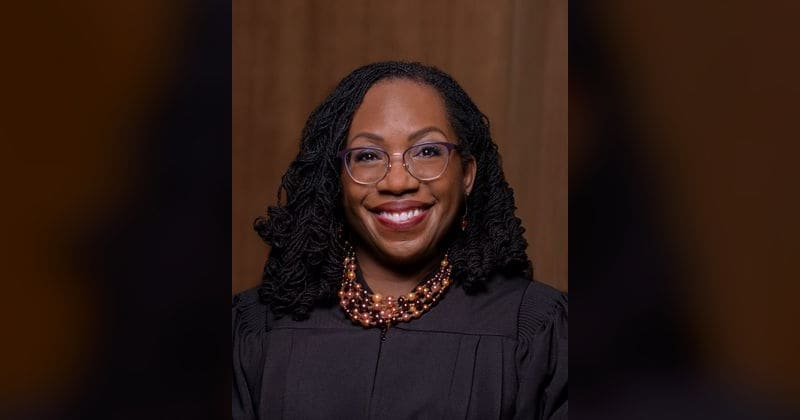
The Supreme Court on Monday cleared the way for the Trump administration to move ahead with parts of an executive order that tightens the rules around mail-in voting, just months before the November midterm elections.
In a 6-3 ruling along ideological lines, the court granted an emergency request from the Justice Department to lift an injunction that a federal judge in Massachusetts had issued in June. That injunction had blocked the Department of Homeland Security and the U.S. Postal Service from carrying out parts of President Donald Trump's order in the 23 Democratic-led states and the District of Columbia that sued to stop it, according to CBS News.
What the Ruling Allows
The unsigned decision said the states had sued too soon. "The Court's disposition of this application does not mean that any measure taken by the Government to implement the Order will necessarily be lawful," the justices wrote, according to CBS News. "On that score, time will tell. But the Order itself does not harm the States, so the District Court lacked jurisdiction to bar the Government from trying to implement it."
The ruling clears the way for the Department of Homeland Security to build state-by-state lists of residents it considers eligible to vote, CBS News reported. The Postal Service has already published a final rule requiring specific design elements on mail ballot envelopes and directing state election officials to submit voter data to an online portal, according to CBS News. The Postal Service said it will not decide who is eligible to vote or count any ballots, CBS News reported.
A second injunction, issued by U.S. District Judge Indira Talwani in a separate case brought by voting rights groups, still blocks the Postal Service from carrying out new mail ballot procedures for this year's elections, according to CBS News and the Guardian. The Justice Department is expected to argue the Supreme Court's ruling applies to that case too, CBS News reported. The White House called Monday's decision "a major win for the security of American elections," spokeswoman Lauren Bis said in a statement carried by CBS News.
Dissents and Backlash
Justice Sonia Sotomayor, joined by Justice Elena Kagan, wrote in dissent that the ruling "merely postpones adjudication" of the underlying legal fight and does not address whether Trump has any authority to interfere with how states run federal elections, according to CBS News. Justice Ketanji Brown Jackson wrote separately that the decision "needlessly injects chaos and uncertainty into the upcoming midterm elections," the Guardian reported.
Derrick Johnson, president of the National Association for the Advancement of Colored People, said the ruling should serve as a wake-up call. "Let this ruling be a reminder that democracy is never, ever guaranteed," Johnson said, according to the Guardian. "We have to fight for it, we have to fight to keep it and we have to protect the rights we do have within it ... they are trying to do everything they possibly can to make it difficult for you to vote."
Trump signed the executive order in March, directing DHS to compile "state citizenship lists" and telling the attorney general to prioritize prosecuting local officials who send ballots to people deemed ineligible, the Guardian reported. Trump has repeatedly compared mail voting to cheating despite having used it himself, according to the Guardian.
Sources
- Ruling 20260727144320600 Trump V. California Application And Appendix Supreme Court of the United States
- Ruling 20260804154959362 Trump V. California Reply Final Supreme Court of the United States
- Ruling 20260803142451298 Consolidated Opposition To Applications Supreme Court of the United States
Related coverage
Justice Department Plans Record 1,000 Election Monitors for Midterms
Harmeet Dhillon, who runs the Justice Department's Civil Rights Division, said the agency will recruit federal employees from across government to reach the number, more than ten times what it sent in 2024.
Trump Asks Supreme Court to Let $400 Million Ballroom Work Continue
The administration says the project is 65 percent finished and warns that a court-ordered halt would amount to unlawful "construction-by-injunction."

Trump Accuses Canada of Wanting 'Benefits of Being a State, Without Being One'
The president's Truth Social post came a day after Prime Minister Mark Carney of Canada announced dollar-for-dollar retaliatory tariffs on U.S. steel, dairy and other goods following the collapse of trade talks.
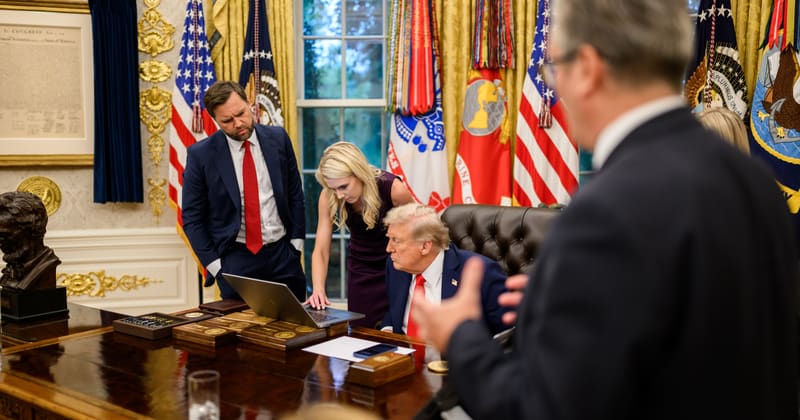
Natalie Harp, Trump's 'Human Printer' Aide, Draws Scrutiny After Senator's Viral Speech
Senator Jon Ossoff's viral mention of the White House aide has renewed attention on her unusually close role at Donald Trump's side, including reports she joined him on a secret flight out of Turkey.