Trump Family's Crypto Bank Wins Federal Approval Despite Conflict of Interest Concerns
Regulators cleared World Liberty Financial Trust Company this month, and experts say depositors have little reason to buy its stablecoin except to curry favor with the White House.
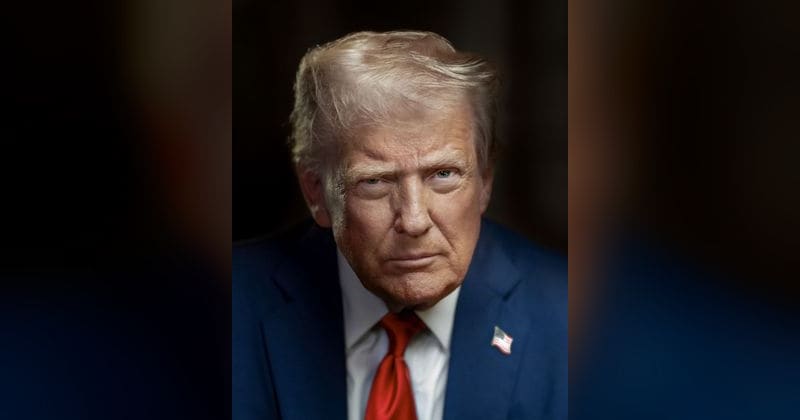
A crypto bank partly owned by the family of President Donald Trump has won conditional approval from federal regulators to begin operating, even though experts say the venture makes little financial sense unless depositors are trying to win favor with the White House.
The Office of the Comptroller of the Currency, a federal banking regulator led by a Trump appointee, granted World Liberty Financial Trust Company conditional approval earlier this month, Guardian Business reported. An entity tied to Trump and his relatives owns about 38 percent of the company.
World Liberty is not a bank in any traditional sense. It cannot lend money, issue mortgages or credit cards, or get federal insurance on deposits, according to Guardian Business. What it can do is issue USD1, a stablecoin created by the Trump family's crypto venture that is pegged to the value of the US dollar.
A business model built on political access
Under the GENIUS Act, the federal law Trump signed in July 2025 that created the first national regulatory framework for stablecoins, issuers cannot pay depositors interest on the funds they hand over. World Liberty's bank, however, can invest that cash in Treasury bonds and keep the interest for itself, Guardian Business reported.
That leaves little obvious reason for anyone to buy USD1 over competitors like Tether or Circle's USDC, which have far larger market shares. James Angel, an associate professor at Georgetown University's McDonough School of Business, told Guardian Business that currying favor with Trump is "the only reason really" to do it. "This is a very efficient way to buy influence with the Trump gang," he said.
Democrats have pointed out that no other US president has held a financial stake in a bank that his own administration would approve and oversee, according to Guardian Business. Jeremy Kress, a law professor at the University of Michigan's Ross School of Business, called the approval "unprecedented," telling Guardian Business that Trump "controls the bank regulatory process" and got the bank he wanted approved.
Regulator and company defend the approval
The comptroller's office has said the application was reviewed by career staff rather than the Trump-appointed head of the agency, and that it consulted government ethics officials to ensure the process followed the rules, Guardian Business reported. A World Liberty spokesperson said the charter would bring "robust and permanent regulatory supervision" that outlasts the Trump administration.
USD1 currently has about $4 billion in circulation, compared with roughly $183 billion for Tether and more than $70 billion for USDC, according to Guardian Business. World Liberty has said USD1 is nonetheless the second-largest stablecoin by market value and trading volume among coins that comply with the GENIUS Act, since Tether does not meet that law's requirements.
Trump signed the GENIUS Act in July 2025, months after his family's venture launched USD1 in March of that year. At a White House event, Trump said he named the legislation after himself and credited it with paving the way for "widespread adoption of dollar-backed stablecoins."
Sources
- Official notice Fact Sheet: President Donald J. Trump Signs GENIUS Act into Law The White House
- Official notice World Liberty Trust Company occ.treas.gov
Related coverage
FBI Seizes Eric Swalwell's Devices, Searches His Home in Misconduct Probe
Federal agents executed search warrants targeting the former California congressman over the weekend as part of a criminal investigation into sexual misconduct allegations.
Florida Senate Race Set: Republican Ashley Moody Vs. Democrat Angie Nixon
Nixon, a Democratic Socialist, beat impeachment witness Alex Vindman in the primary, while Moody, who holds the seat by appointment, easily won the Republican nomination.
Justice Department Plans Record 1,000 Election Monitors for Midterms
Harmeet Dhillon, who runs the Justice Department's Civil Rights Division, said the agency will recruit federal employees from across government to reach the number, more than ten times what it sent in 2024.

Democrats Press Trump Administration Over USS Abraham Lincoln Conditions
Senator Ruben Gallego and other Democrats are pressing the Pentagon after months of reports about low morale, supply shortages and possible overboard attempts during the carrier's nearly nine-month deployment.