Typhoon Narra Floods Force Tens of Thousands to Flee in China, Vietnam
Heavy rain from the typhoon has also pushed back the launch of China's Chang'e-7 moon mission.
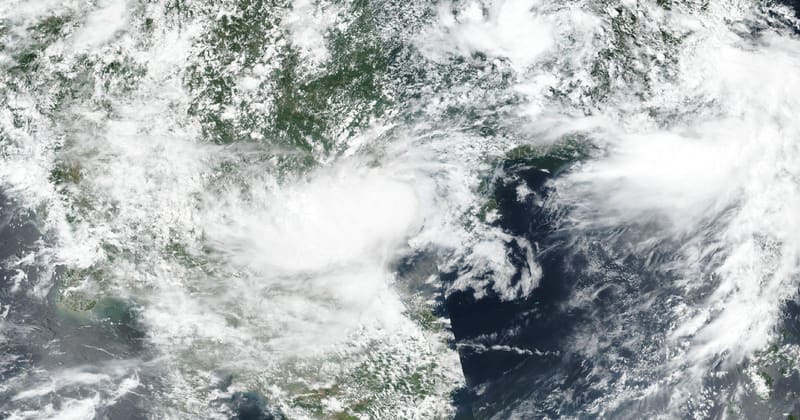
Typhoon Narra has triggered floods and landslides across southern China and northern Vietnam, forcing tens of thousands of people from their homes and damaging roads, power lines and farmland, according to Channel NewsAsia and The Straits Times.
China's state broadcaster CCTV said rising floodwaters prompted authorities to relocate about 54,000 people in the southern region of Guangxi, including more than 8,000 who were moved to emergency shelters. The Straits Times reported the combined toll of displaced people in China and Vietnam topped 58,000.
In China, water levels on 15 rivers rose past warning thresholds, and CCTV video showed brown floodwater swamping roads and rows of low-rise buildings in Chongzuo, a city in Guangxi. Rescuers in rubber boots waded through knee-deep water, and some used boats to pull stranded residents to safety, according to CCTV. Forecasters expect torrential rain to keep falling through Wednesday in Guangxi, Guangdong, Hainan and Fujian, CCTV said.
The storm lingered over the Beibu Gulf, also called the Gulf of Tonkin, but weather officials said it was not expected to make landfall and would instead dump heavy rain across the region's north.
Vietnam Reports One Death, Thousands Displaced
In Vietnam, days of heavy rain from Narra killed one person and displaced more than 4,300 households, Channel NewsAsia reported. The mountainous northern provinces of Lang Son and Cao Bang were hit hardest, recording between 236 and 300 millimeters of rain in the 24 hours ending the morning of August 24.
Flooding also reached Quang Ninh province, home to Ha Long Bay, a UNESCO World Heritage site known for its limestone islands. Floodwaters swamped parts of the city there and disrupted tourism, fishing and transportation, according to Channel NewsAsia. Nationwide, the storm cut power to nearly 55,000 households, closed schools and offices, and destroyed more than 10,000 hectares (about 24,700 acres) of rice and other crops.
Moon Launch Postponed
China also postponed the planned launch of its uncrewed Chang'e-7 lunar mission because of the weather, The Straits Times reported. The mission had been expected to lift off as early as August 24 from the Wenchang Space Launch Site on Hainan island, but officials said the spacecraft did not meet launch conditions. The National Astronomical Research Institute of Thailand, which has a scientific instrument aboard the mission, confirmed the delay was caused by the typhoon.
Sources
Related coverage

China Vows to Back Iran Diplomacy as Trump Targets Tehran's Trading Partners
Beijing's statement came a day before US Treasury Secretary Scott Bessent is due to unveil a plan to punish Iran's economic partners, chief among them China.

Landfill Collapse Kills at Least 30 in Guinea's Capital
Heavy rains triggered a landslide at a Conakry dump hours before it was set to close, burying shacks in the neighborhood below.

Iran Warns Middle East Neighbors Against Joining US Sanctions Campaign
President Masoud Pezeshkian acknowledged Iran is facing "many problems" as Washington vows to force the collapse of the government through a new round of sanctions.

DR Congo Ebola Outbreak Growing Exponentially, UN Warns
The outbreak, already the worst in the country's history, has spread across an area larger than France as health workers race to test a vaccine against a rare strain of the virus.