Why the Korean War Never Officially Ended
An agreement signed in ten minutes has governed the Korean Peninsula for 73 years. What an armistice is, what it is not, and why the peace treaty it promised never came.
South Korea's president stood up on Liberation Day this month and proposed talks to end a war that stopped shooting in 1953. That is not a contradiction. The Korean War never officially ended: the fighting was halted by an armistice signed on July 27, 1953, and the peace treaty that document expected to follow has now failed to arrive for 73 years. President Lee Jae Myung's proposal, made in his Aug. 15 address and reported by the Korea Times, is the latest attempt to replace that armistice with something permanent.
To see why that is hard, it helps to know what the armistice actually is, and what it is not.
A military document, with the politics left for later
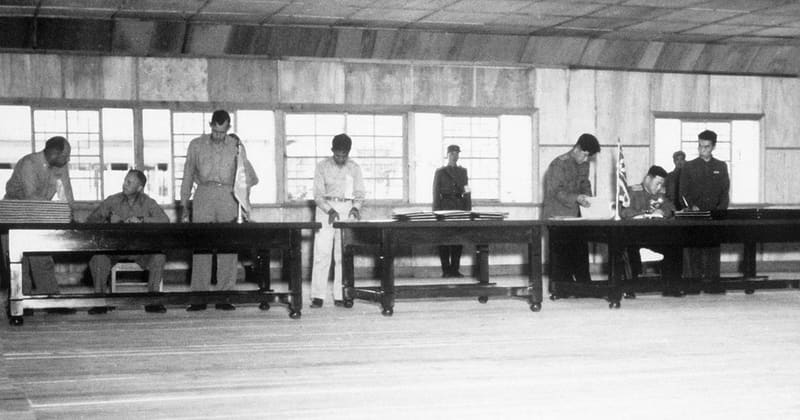
The armistice took longer to negotiate than any before it: 158 meetings spread over two years and 17 days, according to the U.S. National Archives. The signing itself took about ten minutes. Lt. Gen. William K. Harrison Jr. signed for the United Nations Command, and Gen. Nam Il for North Korea's army and the Chinese volunteer forces fighting alongside it. The commanders in chief on each side countersigned later, away from the cameras.
One government at the table never signed at all. South Korean President Syngman Rhee opposed the agreement because it left Korea divided, the Archives' Prologue magazine records, and his refusal still shapes the legal argument today: the country with the most at stake is not a party to the document that governs its border.
The text is open about its own limits. It calls itself a step toward stopping the bloodshed "until a final peaceful settlement is achieved," and its terms are military: a ceasefire line, a demilitarized zone two and a half miles wide, rules for what each army may do. The political questions were deferred to a conference of governments, which the agreement recommended be held within three months.
The peace conference met once, and produced nothing
That conference convened in Geneva in April 1954, nine months late. Delegates argued for seven weeks over how a unified Korea might be constituted and who would supervise its elections. The conference ended on June 15, 1954 without a settlement, according to the State Department's Office of the Historian, and no successor conference was ever convened. The temporary line hardened into one of the most fortified borders on Earth.
So the sequence the armistice imagined, ceasefire first and peace second, simply stopped at step one.
Three words that mean three different things
News coverage tends to use ceasefire, armistice and peace treaty loosely. They are distinct instruments.
- A ceasefire stops the shooting. It can be local, informal and temporary, and it settles nothing.
- An armistice is a formal agreement between military commands to suspend hostilities indefinitely. The war continues as a legal state; only the fighting stops.
- A peace treaty is concluded by governments. It ends the war itself, settles the political questions and normalizes relations.
Korea has the middle one. The two Koreas remain, in the language of international law, belligerents in an unfinished war.
Ending the Korean War has been promised before
The most recent near miss came in 2018. Moon Jae-in and Kim Jong Un, meeting at the same truce village where the armistice was signed, agreed in the Panmunjom Declaration to pursue talks with the United States, and potentially China, to declare an end to the war that year, CNN reported. The year passed. The diplomacy collapsed alongside the Hanoi summit the following spring, and the declaration was never made.
Even that pledge was for something less than a treaty. An end-of-war declaration is a political statement, not a binding settlement, the Brookings Institution notes, and Pyongyang has wanted one partly because of what it might imply about the UN Command and the American military presence in the South. Which is also why Washington and Seoul have hesitated: a symbolic end to the war could carry very unsymbolic consequences for the alliance defending it.
Why a treaty is so hard to write
Three problems have outlasted every negotiation. Who signs, first of all: South Korea never joined the armistice, the North has long argued the treaty conversation belongs with Washington, and China's role is unsettled. What it touches, second: a treaty would force decisions on the UN Command, on U.S. forces in Korea and on the border itself. And third, the nuclear program, which Lee tied directly to his proposal. No one in Seoul or Washington wants to legally close the war while the weapons that could reopen it keep improving.
None of that makes the attempt pointless. It does explain why every attempt so far has produced a pause, a pledge or a photograph, and never a treaty.
The armistice was written to be temporary. It is now older than most of the people it protects, and until governments finish what the generals started at Panmunjom, the Korean War will remain what it has been since 1953: suspended, not over.
For the proposal that prompted this piece, read [South Korea's call to replace the armistice with peace](/world/south-korea-s-lee-calls-for-talks-to-replace-korean-war-armistice-with-peace/).
Sources
Related coverage

South Korea's Lee Calls for Talks to Replace Korean War Armistice With Peace
President Lee Jae Myung of South Korea proposed direct talks with North Korea on ending the 1950-53 war and curbing Pyongyang's nuclear program, even as the North has rebuffed his previous outreach.
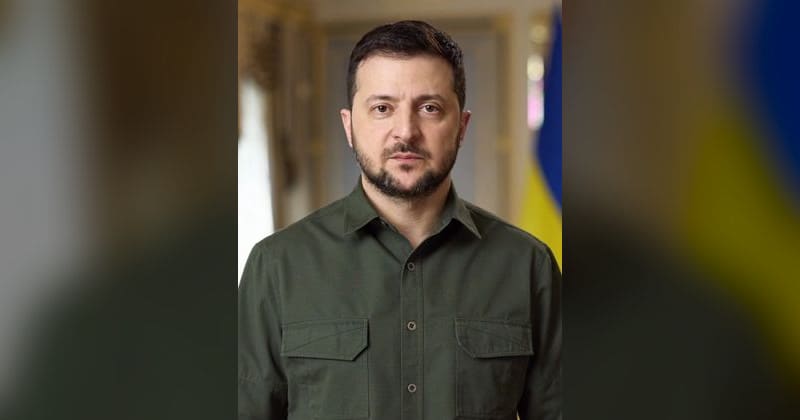
Zelenskyy Says North Korea Plans to Send Up to 50,000 More Troops to Russia
Ukraine's president said Pyongyang has decided to send tens of thousands more soldiers to fight alongside Russian forces, and he pressed South Korea to help Kyiv with air defenses in response.
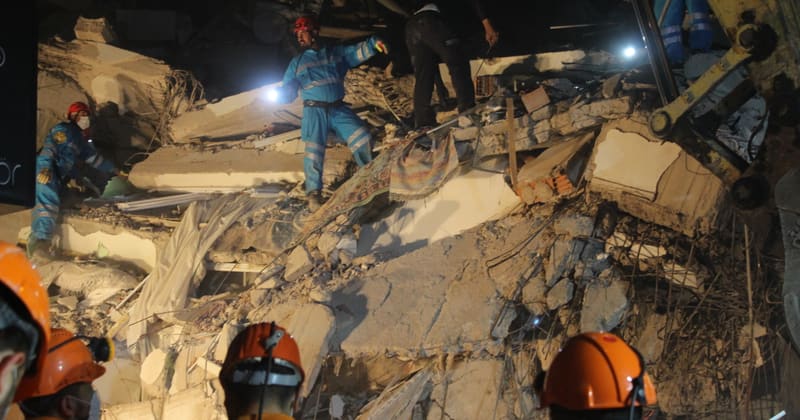
Why the Death Toll From a Disaster Keeps Changing
Four counters, four numbers, one earthquake. What the figures in a disaster headline are actually measuring, and why the first one is always low.
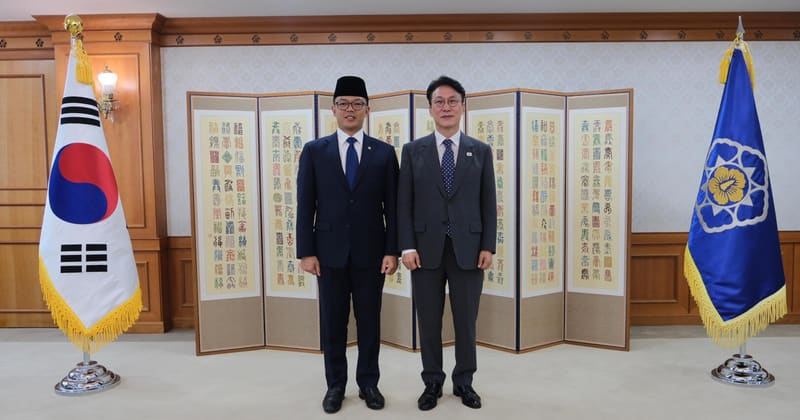
Ex-Prime Minister Kim Min-seok Wins Seoul Primary, Nears Democratic Party Leadership
Kim now leads the cumulative vote count by more than eight points heading into Monday's national convention, where South Korea's ruling Democratic Party will pick its new leader.