Why the Death Toll From a Disaster Keeps Changing
Four counters, four numbers, one earthquake. What the figures in a disaster headline are actually measuring, and why the first one is always low.
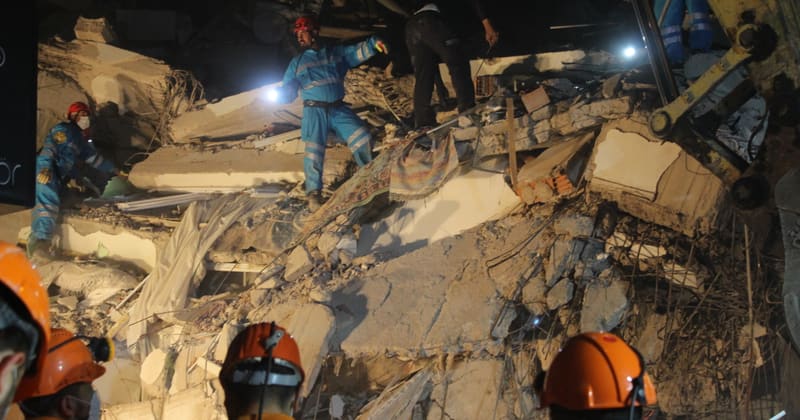
Within about six hours of the magnitude 7.4 earthquake that struck western Colombia on Aug. 10, three different death toll figures were in circulation, and none of them was wrong. President Abelardo de la Espriella gave a preliminary count of 111 dead and 87 injured. The Colombian Association of Capital Cities said that evening that 132 people had died and 570 were injured, according to Al Jazeera. Digital registries where families report relatives they cannot find were listing more than 1,400 names by that afternoon, TIME reported.
By the next day the confirmed count had passed 200, CNN reported, while rescue teams still had not reached the ground closest to the epicenter.
Figures that move like that look like guesswork. Almost none of it is. A toll changes because of what counts as a death, who is entitled to confirm one, and how long the confirming takes.
What a death toll actually counts
An official death toll is not an estimate of how many people died. It is a count of deaths an authority has recorded, which in most countries means a body recovered, examined, and entered in a register. A person crushed inside a building that has not been dug out is not in the number. Neither is anyone under a landslide that will take a month to clear.
That is why the count often climbs fastest several days after the event rather than during it. Rescue crews in Colombia had not reached the area nearest the epicenter a full day after the quake, according to CNN, so nothing from the worst-hit ground could be in any figure published before that.
Read the first number as a floor. It is the smallest count that can be defended, and it was assembled by people who are also running a rescue.
The missing are on a separate list
Confirmed dead and missing are different categories, and names do not move between them quickly. Family registries fill up within hours because anyone can add a name to them. They contain duplicates, they contain people who are alive and out of phone range, and in Colombia they held roughly ten times the confirmed toll on day one.
Moving a name onto the dead list needs a body or a legal declaration of death, and in most jurisdictions the declaration takes months at minimum. So a very large missing figure sitting beside a small death toll is not a contradiction and not a cover-up. It is two processes running at very different speeds.
Four counters, four questions
In the first days after a disaster, several bodies publish numbers at once, and they are not measuring the same thing.
- The national government publishes what it has verified. It is the conservative figure and usually the one quoted as official.
- Mayors and departmental officials publish their own areas, faster, and the parts do not always add up to the whole.
- Family and civil-society registries publish the missing. Largest, quickest, unverified by design.
- Scientific agencies publish a forecast before anyone has counted anything. For the Colombia quake, USGS issued a red alert for economic losses and an orange alert for shaking-related fatalities, stating that "Significant casualties are likely." That is a projection from shaking and building stock, not a body count, and USGS says so.
An outlet quoting a different number from another outlet has usually picked a different one of those four, at a different hour.
Some deaths take years to be counted
The slowest revisions are the ones that change the answer completely, and they come from a different question: how many more people died than would have died otherwise.
Puerto Rico's official toll after Hurricane Maria in 2017 stood at 64. The government commissioned researchers at George Washington University, who estimated 2,975 excess deaths in the six months after the storm, and the governor raised the official figure to that number in August 2018, the BBC reported. Those additional deaths were mostly people who lost dialysis, oxygen, refrigerated medicine, or clean water when the power went out. Almost none of them would appear in a body count taken in the first week, because the first week is not when they died.
How to read the number in a headline
Three things make a toll legible. Note who issued it, because a mayor's figure and a national figure are different objects. Note when, because a number more than a day old is a historical fact rather than a current one. And expect it to rise, because every mechanism above pushes in the same direction.
A death toll that has stopped moving usually means the counting stopped, not the dying.
For what is happening right now, [recent earthquakes worldwide](/earthquakes/) lists every event of magnitude 2.5 or greater from the past 24 hours, with the USGS impact alert beside each one.
Sources
Related coverage

What a Diesel Export Ban Would Actually Do
Diesel is at a record and Washington is weighing a ban on shipping it abroad. What that would do to the pump price, and why the fuel is in the wrong place.

Indonesia Earthquake Kills at Least 47 on Flores Island
A magnitude 7.7 quake off Flores Island triggered a brief tsunami warning and hundreds of aftershocks as rescuers struggled to reach communities cut off by landslides.

Apple Cuts More Than 200 Jobs on Vision Pro and Siri Teams
The cuts hit gaming and immersive video staff on the Vision Pro headset team and older Siri engineers, as Apple shifts resources toward smart glasses and its new AI assistant.

Ecuador Intelligence Chief, Five Americans Killed in Kenya Helicopter Crash
All seven people aboard a sightseeing helicopter died when it went down near Mount Ololokwe in northern Kenya on Wednesday, officials said.