Federal Judge Rules Pentagon's Anthropic Risk Label Was Illegal Retaliation
U.S. District Judge Rita Lin found that Defense Secretary Pete Hegseth's move to blacklist the AI company amounted to unconstitutional payback for its safety demands.
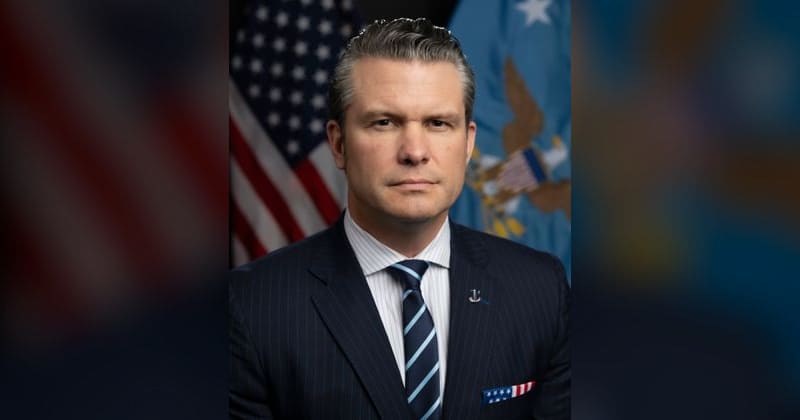
A federal judge ruled Thursday that the Trump administration broke the law when it labeled the AI company Anthropic a national security risk earlier this year, a designation that had frozen the company out of federal contracts across nine agencies.
U.S. District Judge Rita Lin found that Defense Secretary Pete Hegseth's decision to brand Anthropic a "supply chain risk" was "arbitrary and capricious" and amounted to unlawful retaliation against the company for speaking out against the Pentagon, violating its First Amendment rights, according to her ruling. Lin also found Anthropic was denied due process under the Fifth Amendment, since the company was never given a chance to contest the label before it was imposed.
"The empty invocation of national security is not a blank check to punish and retaliate against government critics," Lin wrote in her 59-page decision, according to TechCrunch and the Guardian. She vacated Hegseth's February 27 order and lifted a related measure that had barred military contractors and suppliers from doing business with Anthropic at all, Wired reported. The ruling covers all nine agencies that had imposed sanctions on the company, including the Pentagon, the Treasury Department, the State Department and the Department of Homeland Security, according to Wired.
A Fight Over Autonomous Weapons
The dispute traces back to negotiations over a $200 million deal for the Pentagon to use Anthropic's Claude models, according to Wired. Anthropic refused to drop safeguards that would have let the military use its models for fully autonomous weapons or mass surveillance of Americans. Hegseth rejected any limits, arguing a contractor could not dictate how its technology gets used once the government buys it, Wired reported. Wired also reported that the rift widened after reports the U.S. had used Claude during the operation to capture Venezuelan President Nicolás Maduro, and that a Palantir employee later relayed an Anthropic staffer's concerns about that use to U.S. officials.
Lin pointed to what she called inconsistencies in the government's own conduct, noting that Hegseth had separately proposed invoking the Defense Production Act to treat Anthropic as essential to national security, even as the Pentagon still pursued a contract with the company and discussed using its new model, Mythos, for cybersecurity work, according to TechCrunch and Wired. She also noted that Anthropic has no back door into its own technology once it is handed over to the Defense Department.
The Justice Department had argued that Anthropic's refusal to drop its restrictions created uncertainty for the Pentagon and risked disabling military systems during operations, according to a court filing cited by the Guardian. An Anthropic spokesperson, Danielle Cohen, said in a statement that the company welcomed the ruling and remains "focused on working productively with the government to harness AI for our national security so all Americans benefit from this technology."
The ruling takes effect immediately and makes permanent a temporary suspension of the sanctions that Lin had ordered in March, according to the Guardian. The government is expected to appeal. A separate Anthropic lawsuit over a related supply-chain designation remains pending before the U.S. Court of Appeals for the District of Columbia Circuit.
Sources
Related coverage
Sony Music, Warner Chappell Sue Anthropic Over AI Training Data
Thirty-five music publishers accuse the AI company and its co-founders of pirating millions of songs and books to train its Claude chatbot.

Anthropic Opens Preview of Standard Letting AI Agents Run Lab Hardware
The system, called the Model Hardware Standard, lets AI agents operate microscopes, robotic arms and other lab equipment, and Anthropic says it developed the tool with HHMI Janelia Research Campus.

Anthropic Signs $45 Billion Cloud Deal With Nscale For West Virginia Data Center
The six-year agreement gives the AI startup access to 460 megawatts of computing power built around Nvidia's newest chips, as Anthropic races to keep pace with demand ahead of a planned IPO.

Adobe Adds More Than 70 Creative Tools To Slack
The update lets Slack's chatbot pull from Photoshop, Illustrator and Premiere without leaving the chat window, Adobe said.