US Rejects Israeli Ministers' Calls to Remove Palestinians From Gaza
The State Department says it opposes any forced displacement from Gaza after two Israeli ministers pushed plans to send the territory's roughly two million residents abroad.
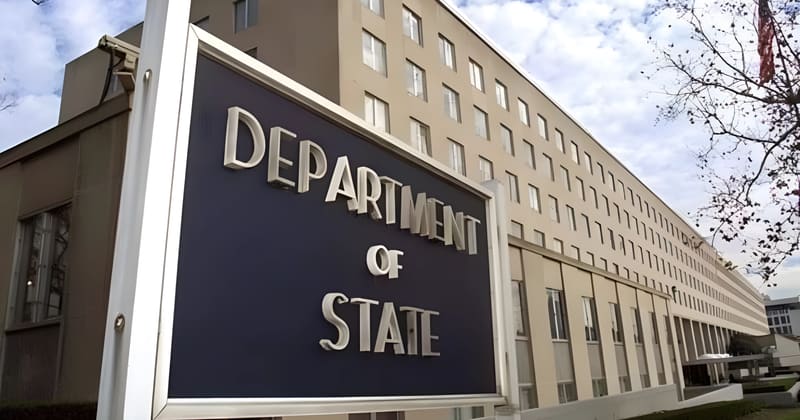
The United States has rejected calls from senior Israeli officials to remove the Palestinian population from the Gaza Strip, a rare public break with Israel's government.
Asked about Israeli Defense Minister Israel Katz's description of depopulating Gaza as the only "solution" to the crisis, a State Department spokesperson pointed to President Donald Trump's 20-point plan, which established a ceasefire in Gaza last year. "No one will be forced to leave Gaza and those who wish to leave will be free to do so and free to return," the spokesperson said, quoting the plan. "The United States does not support any plan or proposal for the forced displacement, expulsion, or mandatory transfer of the population of Gaza."
Katz said this week that Trump had only "frozen," not canceled, support for removing Palestinians from Gaza. "In the end, there is no real solution for Gaza without this migration," he said, adding that Israel is ready to move people out "by sea, by air and by any means." National Security Minister Itamar Ben-Gvir went further the next day, laying out a 20-page plan titled "National Work Plan for Voluntary Emigration from the Gaza Strip" that calls for removing 250,000 Palestinians from Gaza within a year and the rest of its roughly two million residents over the following six years. "Instead of illusions of peace now, we need actions of emigration now," Ben-Gvir said. He has not named any country willing to take in the population.
Forced displacement of civilians in occupied territory is a war crime under the Geneva Conventions. An independent United Nations inquiry earlier this year found that Israel has committed genocide in Gaza by deliberately targeting Palestinian children.
Hamas calls for unified Arab response
Hamas spokesman Hazem Qassem urged Arab and Muslim nations to "take serious and unified action" against the Israeli proposals, calling the ministers' statements "an extremely dangerous development." Arab governments, including US allies, have consistently opposed any removal of Palestinians from their land.
Prime Minister Benjamin Netanyahu visited a military outpost in Gaza this week to insist Israel would not withdraw from territory it now holds. "We control 60% of the strip. And there is still more to come," he said. Israel's deputy chief of general staff, Major General Tamir Yadai, put the figure at 65%, well above the 53% Israel agreed to under the ceasefire Trump brokered last year.
Ceasefire talks have stalled
Jared Kushner, Trump's son-in-law and Middle East envoy, met with Hamas officials and Netanyahu last month but appeared to back Israel's position that there will be no reconstruction in Gaza until Hamas disarms. Hamas has agreed to give up its weapons, but the broader ceasefire plan has made little progress. The State Department said any Palestinian movement out of Gaza "must be strictly voluntary" and that its focus remains on demilitarization and rebuilding the territory.
Yousef Munayyer, who heads the Palestine/Israel program at the Arab Center Washington, DC, said the stalled peace effort reflects a broader Israeli position. "They cannot wrap their heads around any sort of solution to the fundamental problem that they have, which is that they've antagonized an entire native population by imposing themselves on them, other than through the elimination of that population," he said. He added that pressure to remove Palestinians extends beyond Gaza to the West Bank and to Palestinian citizens of Israel.
The elections in Israel are set for October 27, with polls showing a tight race for Netanyahu, whose government has included the once-marginal far-right ministers now pushing the removal plans.
Related coverage
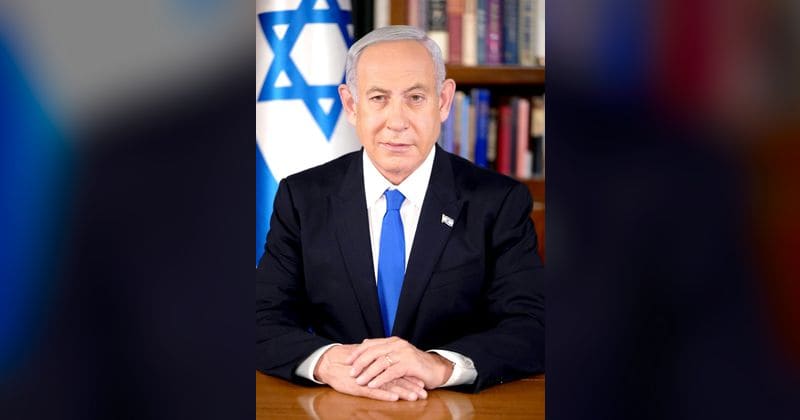
Netanyahu Rejects US-Backed Gaza Plan, Says Israeli Troops Stay Until Hamas Disarms
Israeli Prime Minister Benjamin Netanyahu says his military will not leave Gaza until Hamas gives up its weapons, dealing a setback to a peace plan President Trump had called a breakthrough.

Kushner Meets Egypt's Sisi as Hamas Delegation Also Arrives for Gaza Talks
Jared Kushner is set to meet Israeli Prime Minister Benjamin Netanyahu on Monday, days after Netanyahu rejected the Trump administration's roadmap for ending the war in Gaza.

Trump Says He Will Meet North Korea's Kim Jong Un Later This Year
The announcement follows Trump's order to scale back joint US-South Korea military drills and an unusually specific claim about North Korea's nuclear arsenal.

Venezuela and Israel Restore Consular Ties After 17-Year Break
The two governments will set up a joint mechanism to provide consular services to their citizens, a first step toward repairing ties that Hugo Chávez severed in 2009 over Israel's assault on Gaza.