Moderna and Merck Say Cancer Vaccine Combo Beat Keytruda Alone in Late-Stage Trial
Moderna shares jumped as much as 150 percent after the companies said their personalized mRNA vaccine, paired with Merck's Keytruda, cut the risk of melanoma returning.
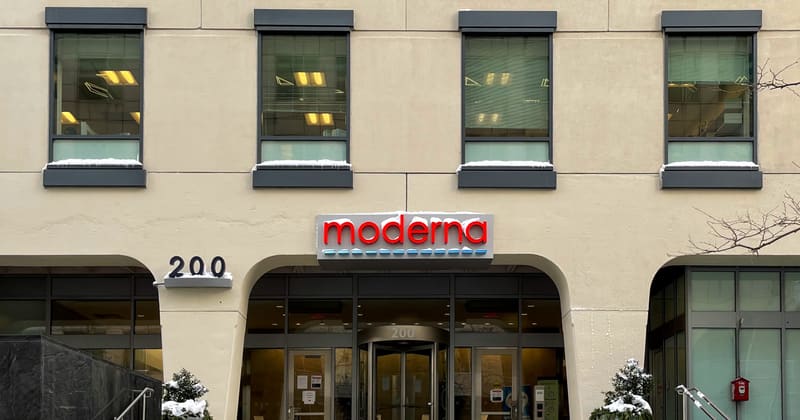
Moderna and Merck said Wednesday that their experimental, personalized cancer vaccine helped keep melanoma from coming back in patients who had it surgically removed, according to the companies. It is the first late-stage trial success for this kind of individualized, mRNA-based cancer treatment, the companies said.
The news sent Moderna's stock up nearly 150 percent, CNBC reported, while Merck shares climbed more than 10 percent. Moderna's market value going into the day was around $25 billion, far smaller than Merck's roughly $333 billion, according to CNBC, which is why the same trial news moved the two stocks so differently.
A Shot Built for One Patient
The vaccine, called intismeran autogene, is manufactured individually for each patient. It carries genetic instructions for up to 34 mutations found in that patient's own tumor, according to Ars Technica. Healthy cells use those instructions to produce protein fragments that resemble the cancer, teaching the immune system to recognize and attack it. Paired with Keytruda, Merck's already-approved immunotherapy, the goal is to have the immune system finish the job of hunting down stray cancer cells.
The Phase 3 trial enrolled 1,137 patients with stage IIB to IV melanoma whose visible tumors had already been surgically removed, Ars Technica reported. Patients were split two to one between the vaccine-and-Keytruda combination and Keytruda alone, with neither doctors nor patients told which treatment they were getting. The companies said the combination significantly extended how long patients went without their cancer returning, and also cut the risk of the disease spreading to other parts of the body, compared with Keytruda alone.
Data Still to Come
The companies have not yet released detailed figures on how large the benefit was, according to Ars Technica, and it is not yet clear whether patients who got the combination treatment are living longer overall. Moderna and Merck said they plan to present fuller results at a future medical conference.
"It's a big moment for medicine, a big moment for patients," Moderna CEO Stephane Bancel said on CNBC's "Squawk Box." Dean Li, president of Merck Research Laboratories, told CNBC the companies expect to start talking with regulators about the treatment's safety within the next few months.
Oxford University cancer researcher Lennard Lee called the result "an important moment for a field that scientists have been working toward for many years," though he cautioned that key details, including how much the treatment extends survival and which patients benefit most, are still unknown.
Melanoma makes up only about 1 percent of skin cancer cases but accounts for most skin cancer deaths, according to CNBC. Merck and Moderna are also testing the vaccine against other cancers, including non-small cell lung cancer, bladder cancer and renal cell carcinoma.
Sources
Related coverage

JPMorgan Nears $1 Trillion Valuation as Wall Street Credits the 'Jamie Dimon Premium'
The bank's market value has jumped from $138 billion to roughly $970 billion since Jamie Dimon took over, and analysts say investors are still paying extra for him personally.
Super Micro Stock Jumps Nearly 9% After Strong Sales Forecast
The server maker's upbeat 2027 revenue outlook, paired with a similar forecast from CoreWeave, pushed AI infrastructure stocks higher and fed a broader Wall Street push to bankroll data center construction.
Apple Stock Slides as Wall Street Sours on Canceled Glass iPhone
Investment firm Jefferies cut Apple to a sell-equivalent rating after supply chain checks suggested the company dropped plans for an all-glass iPhone tied to the device's 20th anniversary, adding to worries over memory costs and slowing sales.

Trump and Carney Hold Talks as 50% Tariffs on Canadian Goods Near Deadline
The two leaders spoke twice as Canada tries to head off tariffs set to hit $20 billion worth of exports including wine, hockey sticks and cement at midnight Wednesday.